Friday, 11 April 2014

Ayşedeniz Gökçin Ankara Concert, April 10th 2014

Last night's musical issue was London based Turkish pianist Ayşedeniz Gökçin's concert in Ankara Music Festival. Titled as 'Pink Floyd Lisztified', the first part was dedicated to solo piano performance of arrangements made by Ayşedeniz Gökçin for some Pink Floyd's legendary progressive rock pieces. We have learned during the concert that most of these arrangements were made in 2011, which was 200th year of Liszt's birth. We have also noticed from the pianist's other small talks between performances that she is truly impressed by Liszt's adherence to the innovation and change. The album including the performances given in the concert is named as Pink Floyd Classical Concept. Let me also remind you that there was also a Chopin-influenced arrangement for "On The Turning Away" in the first part of the concert. As it is said again by Ayşedeniz, it was a great chance for the listeners to be able to compare two different styles of Chopin and Liszt. The solo piano partitions are accompanied by some sound designs and records which are previously performed by Ayşedeniz and processed by Canadian sound engineer Kevin Bryce. The introduction is made with "Welcome To The Machine" followed by "Set The Controls For The Heart". "Hey You", "Wish You Were Here", "Another Brick in the Wall", "Us and Them", "Comfortably Numb", "Shine on You Crazy Diamond" and "High Hopes" were the other Lisztified pieces of Pink Floyd. 

I can say that I like Ayşedeniz Gökçin's arrangements, which are accomplished by applying many different partitions of various instruments to the piano in an interesting way similar to what Liszt was doing for symphonies once upon a time. Especially the arrangements of "Shine on you Crazy Diamond" and "Wish You Were Here", which were travelling totally in another space than the original compositions, were really impressive. 

On the other hand, for some arrangements such as the one for "High Hopes", I have to say that they did not give the same tensional feeling for our ears, which are full of the original version's wonderful aura. In my opinion, the absence of tension and groove in this technically almost-perfect performance was a reason for this. I did not hear a dynamic range which is built up with soft and slow touches and can hit the audience in the end. 

Besides, the bad acoustic conditions of the hall that eliminate the mid-frequencies and present interesting ambiguities in high registers prevented me from following the performance in full concentration. This dry hall caused the sounds created by Ayşedeniz Gökçin with touches and strokes to the strings of the piano to decay so fast that the intented effects could not be achieved. I also thought that some unbalanced sound distribution on the stage especially in second part may be resulted from the sound board ridiculously located underneath the left speaker by the technician. The only thing I can say for the previously recorded sounds and their playbacks is that it would be better if these sounds were played on-the-fly by an individual musician, a DJ or a simple laptop user. 

After the intermission, second part is started and finished quickly by arrangements of Astor Piazzola. We listened to 5 arrangements: Tangota, Muerte del Angel, Fuga y Misterio, Libertango and Adios Nonino. The drummer Russ Webb was on the stage too. We again listened to sound designs (previously recorded and processed sounds). Frankly -even the audience liked it very much- I did not like this second part since the arrangements were not complicated and innovative enough, the tone and the overall sound of the drum set is very bad and the pre-recorded sounds were too mechanical and computerized. I think that the deep rhythms and the bpm-s chosen for the arrangements caused them to sound too simple. Maybe the fact that the piano stayed recessive compared to the other instruments had a contribution in this feeling of mine. The encore was after a long ovation and Ayşedeniz Gökçin played an arrangement for "Billie Jean" from Michael Jackson with Russ Webb.

As a summary, Ayşedeniz Gökçin is a serious talent and an innovative musician. She has many fans and a remarkable audience on international stage. She evidently deserves these. I think, besides all these successful works, she can also present qualified performances for some improvisational jazz pieces (I am sure she has already done this).

(The photo used in the review does not belong to the Ankara concert.)

Ayşedeniz Gökçin Ankara Konseri, 10 Nisan 2014

Dün gece Ankara Müzik Festivali kapsamında Meb Şura Salonu'nda gerçekleştirilen konserde Londra'da yaşayan Türk piyanist Ayşedeniz Gökçin'i dinledim. Konserin ilk bölümü Pink Floyd'un progresif rock'ın kültleri haline gelmiş bazı eserlerine Ayşedeniz Gökçin tarafından yapılan düzenlemelerinin solo piyano icralarına ayrılmıştı ve başlık Pink Floyd Lisztified olarak seçilmişti. Bu düzenlemelerin çoğunun Liszt'in 200. doğum yılı olan 2011'de Liszt tarzında yapılmış olduğunu konserde sanatçının kendisinden öğrendik. Konserde Ayşedeniz Gökçin'in diğer parça arası konuşmalarından Liszt'in değişime ve yeniliğe olan bağlılığından çok etkilendiğini anlıyoruz. Dinlediğimiz icraların yer aldığı son albümün adı Pink Floyd Classical Concept. Konserde Chopin tarzı bir "On The Turning Away" düzenlemesi de dinlediğimizi hatırlatayım. Yine konserde de bahsedildiği gibi Chopin ve Liszt'in piyanoya bakışları arasındaki farkı görmek adına bu büyük bir şanstı dinleyiciler için. Solo piyano icralara kimi zaman daha önceden çalınmış ve stüdyo ortamında işlenmiş ses kayıtları da eşlik etti. Bu seslerin işlenmesi Kanadalı ses mühendisi Kevin Bryce tarafından gerçekleştirilmiş. Giriş "Welcome To The Machine" ve takibinde "Set The Controls For The Heart" ile yapıldı. "Hey You", "Wish You Were Here", "Another Brick in the Wall", "Us and Them", "Comfortably Numb", "Shine on You Crazy Diamond" ve "High Hopes", diğer Liszt etkisi altında düzenlenen Pink Floyd eserleriydi. 

Ayşedeniz Gökçin'in orjinal hallerinden oldukça farklı şekilde, farklı bir çok enstrümanın partisyonunu  -Liszt'in senfoniler için yaptığı gibi- piyanoya uyarlayarak ortaya çıkardığı bu aranjmanları genel manada beğendiğimi söyleyebilirim. Özellikle "Shine on you Crazy Diamond" ve "Wish You Were Here" ana temalarının kullanıldığı ve parçaların alışılmışın dışında noktalara taşındığı düzenlemeler dikkat çekiciydi. Ancak "High Hopes" için yapılanda olduğu gibi bazı düzenlemelerde müzikal tansiyonun eserlerin orjinalleri ile dolu kulaklarımızda aynı heyecanı yaratmadığını söylemek zorundayım. Bu hissiyatımda sanırım teknik olarak mükemmele yakın tonlayan icradaki tansiyon eksikliğinin de katkısı vardı. Yavaş ve yumuşak dokunuşlarla örülüp yükselen ve sonunda dinleyiciyi tutup köşeye atan bir dinamik aralık duyamadım. 

Her şeyin üstünde Meb Şura Salonu'nun orta frekansları neredeyse tamamen yutan ve tizlerde ilginç karışıklıklar sunan kötü akustik koşulları da sanırım performansın tamamını özümsememi engelledi. Bu kuru salon Ayşedeniz Gökçin'in zaman zaman piyanonun içindeki telleri çekerek veya onlara vurarak oluşturduğu seslerin kısa zamanda sönümlenmesine de yol açtı. Ses sorumlusunun kontrol masasını saçma bir şekilde sahne önündeki sol hoparlörün altına yerleştirmiş olması da özellikle ikinci bölümdeki bazı ses dengesizliklerinin sebebi olabilir diye düşünüyorum. Daha önceden kaydedilmiş ve konser sırasında çalınan sesler için söyleyebileceğim tek şey, bu tür elektronik katkıların mümkünse sahnede ayrı bir eşlikçi tarafından "on-the-fly" olarak çalınmasının ve sadece bir laptop kullanıcısı da olsa seyircilere gerçek bir icracı sunulmasının daha iyi sonuçlar ortaya çıkaracağı.


İkinci bölüm, bir saati geçen ilk bölümün ardından verilen bir aradan sonra Astor Piazzola düzenlemeleri ile hızlıca başladı ve bitti. Beş düzenleme dinledik: Tangota, Muerte del Angel, Fuga y Misterio, Libertango ve Adios Nonino. İkinci bölümde davul eşlikçi Russ Webb de sahnedeydi. Bunun yanında ilk bölümde olan ses tasarımının bir benzerini bu düzenlemelerde de duyduk. Açık söylemem gerekirse -seyirciler tarafından çok şevilen- bu bölümü, Astor Piazzola'nın eserlerine yapılan düzenlemelerin pek komplike ve yenilikçi olmamaları, davulun tonunun, tuşesinin ve genel ses kalitesinin çok kötü olması ve kayıtlardan çalınan ses tasarımının oldukça mekanik tonlaması sebepleriyle beğenmedim. Dip ritimler ve düzenlemler için seçilen hız parçaları fazla basit gösterdi diye düşünüyorum. Piyanonun diğer bütün seslerin çok altında kalması da beni etkilemiş olabilir. Konserin ardından uzun süre alkışlanan piyanist biste Michael Jackson'ın "Billie Jean" düzenlemesini yine davulcu Russ Webb eşliğinde icra etti. 

Özet olarak ciddi bir yetenek ve yenilikçi bir müzisyen Ayşe Deniz Gökçin. Pink Floyd düzenlemeleri ile uluslararası platformda kayda değer bir dinleyici kitlesine sahip. Bunu pek tabii hakediyor genç piyanist. Yaptığı bu güzel işlere ek olarak doğaçlamaya yer verdiği caz işlerde de (eminim böyle performansları vardır) çok iyi çalışmalar ortaya koyabileceğini düşünüyorum. 

(Yazıda kullanılan fotoğraf Ankara konserine ait değildir.)

Monday, 10 March 2014

Magnus Öström Band Searching For Jupiter Concert on January 18th 2014in İstanbul (Abstract)


The sounds came before the musicians. It was like the first day of creation of earth: sounds of movements of big land parts and eruption of hot dense water from the ground... Then on coming to the stage the band made an introduction part sounding like -in my opinion- what we hear in the first piece of Miles Davis' Bitches Brew, Pharaoh's Dance. The album started after this introduction and the first four pieces are played in the same order with the album started from The Moon (And The Air It Moves). The impressive first piece was very promising for the later parts of the concert with many aspects. 

Dancing At The Dutchtreat is like a sophisticated glitch between two heavy performances like it is in the album. Bassist Thobias Gabrielsson and Andreas Hourdakis were successfully in harmony when the tension of the music tended to increase in this performance. I should again mention the clock-like accuracy and clearness of Magnus Öström's drumming. 

Daniel Karlsson tried a very different partition on piano for Mary Jane Doesn't Live Here Anymore compared to what we hear in the album for this piece. I generally -kind of- remembered Esbjörn Svensson's tone from Daniel Karlsson especially in the pieces which are composed by Magnus Öström as a kind of ballad for Esbjörn. Mary Jane Doesn't Live Here Anymore is such a piece.


With its mystic name, the title track Searching For Jupiter was among the pieces in the album that let the band do many extra things within the composed bars. The introduction part given by Daniel Karlsson's piano, the lightning fast crashes of Magnus Öström at the end of first part which is linked to Andreas Hourdakis' hopeful guitar tone and the last energetic part producing a heavy metal band's sound were all performed very well.


An authentic arrangement for the concert was linking the depressive Weight of Death from previous album Thread of Life to the hopeful Through The Sun from Searching for Jupiter. Let me make a flashback here to E.S.T. going back to before 2000's. Many careful listeners can easily recognize that EST's early records do not contain pieces which are explicitly named with dead-related titles. Until the Viaticum in 2005, we see two implicitly named pieces: "Pavane, Thoughts of a Septuagenarian" in Good Morning Susie Soho reminding us the melancholy in getting old and "Car Crash" in Strange Place for Snow which is dedicated to Swedish jazz musician Jan Johansson, who died in 1968 by a car accident. Viaticum can be described as the last food/bread a human being eats before dying and the album as a whole is related to death even just with this title. Letter from The Leviathan (a sea monster) is another link to the death when we think about Esbjörn Svensson's scuba diving accident after three years. Although Tuesday Wonderland was a little bit more hopeful record, the last album Leucocyte showed us that the main theme of the band became the meaning of this world and our life as time passed: What is earth? What is jazz? What is birth? What is life? What is death? What is eternity? When we come back to Magnus Öström's own albums Weight of Death from Thread of Life was like a part of this continuum. In my opinion, the title track and At The End of Eternity are the followers of this melancholy in Searching for Jupiter.

We learned from Magnus Öström before the performance Happy And The Fall that this composition was for his three year old son and the symbolization is that people should learn to stand up when fallen down - just like a happy child falling down and learning to stand up himself/herself.

At The End Of Eternity already includes a long drum solo in the album. We had a very different and long one from our magician Magnus Öström in the concert whose beginning is dominated by toms without any crashes or hi-hats. The rests between some passages and the tensional final part of this solo were amazing. 


Piano Break Song was played in the encore. The ending part of this piece turned out to be a very different melody and rhythm in time and I felt like I am listening to a piece from Weather Report. Thus, we may say that the concert started with Miles Davis and ended with Wayne ShorterIn between we had contemporary jazz, rock and fusion.
 
İKSV Salon is one of my favourite performance halls all around the country with its great acoustic conditions and qualified equipment. Adding Magnus Öström and his friend's good soundcheck to this, the resultant sound design was just perfect. Especially the sound from drum kit is just flawless. The drum solos from Magnus Öström produced a real clean and an organic output. The electronic ingredients coming especially from Thobias Gabrielsson and keys from Daniels Karlsson were as clean as their acoustic counterparts.

 
Note: The photos used in the review were taken by official photographer of İKSV Salon, Ali Güler.

Saturday, 8 March 2014

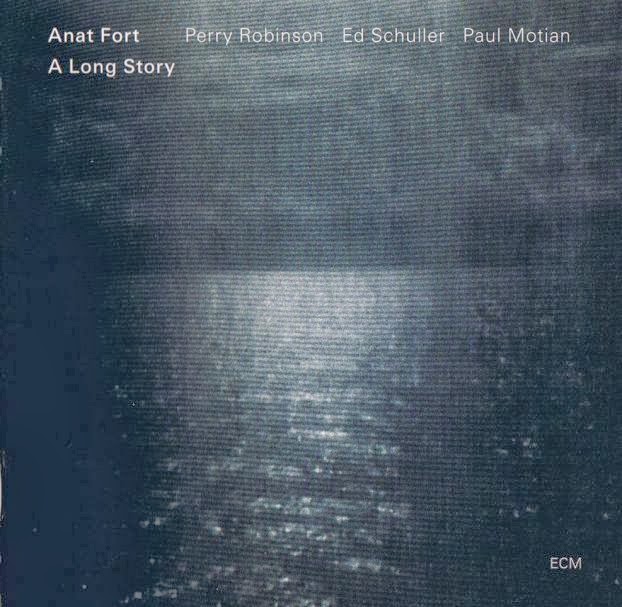
Anat Fort - Life Creates Music, Music Creates Life


It is "a long story" what I first listened from Anat Fort. I really meant it in both perspectives. The name of the first album I get from the talented pianist and composer based in New York (born in Israel) was 'A Long Story', which is a release from ECM in 2007. On the other hand, what I started to feel within the first notes of this amazing album is a long story whose abstract will be given in this text.


I don't remember what I was doing before inserting the CD to the player or what happened next after the 56 minutes and 50 seconds have passed. All I remember was a huge present given to me. I again meant it in both perspectives. The music was like a gift. On the other hand, it was a great feeling of "just now" which captured my soul. This feeling was not an instant one. The contradiction between the naive texture and manifest-like main theme sounding like a Nordic tune pushed me to look at the name of the first piece. It was 'Just Now Var I'.  Later on I would learn that this pretty art-work was crafted just two days before the band is going into the studio. On seeing there are two more variations based on the same theme both in the middle and in the end, I got the main message: Just now, what life taught to the composer turned into music and this music will create life again. There is no regret for past and no anxiety for future. It's like Maxwell's equations of electromagnetic. Electricity produces magnetic field and magnetic field produces electricity. This inevitable conversion goes on forever with speed of light without thinking the past or future.

Paul Motian has played with Anat Fort in this first ECM album of hers. Easier said than done, we are talking about a matching not only with the highly reputable drummer of unforgettable trios of jazz history such as Bill Evans Trio and many other collaborations such as the one with Paul Bley and Keith Jarrett, but also with the heroic contemporary music producer Manfred Eicher. It is not difficult to guess that the recording sessions in 2004 and post-production process thereafter were all dreamy days for Anat Fort. Well, when I listened to the compositions such as 'Morning: Good', 'Lullaby' and solo piano performances such as the one in 'Just Now Var II', I thought: "She deserves the best of what's available." Considering that Anat Fort is accompanied by Ed Schuller on bass and Perry Robinson on clarinet, we may say that she rightfully got a dreamy line-up. 

The impressive melody in 'Just Now Var I', the bass solo in 'Morning: Good', the bass and clarinet introduction in 'Lullaby' meet us in the beginning. Avantgarde-like style duo performance of 'Chapter Two', which is a collaborative composition of Anat Fort and Perry Robinson is located after these three touching numbers of the album. As I just mentioned above, the piano solo performance in 'Just Now Var II' is a real shiny one. Not surprisingly, Paul Motian is a world class touch to all pieces he played. Especially his locomotive character in 'Rehaired' is among highlights of the album. We are learning from liner notes of the album that Paul Motian has not made any rehersal with the rest of the band. Besides the successful collaborative improvisational parts presented there, we see one more important fact in the number 'As Two / Something 'Bout Camels': Anat Fort is very good at composing within catchy melodies possibly thanks to her culturally rich Middle East roots. The energetic solo introduction made by Paul Motian in 'Not The Perfect Storm' is as impressive as what Ed Schuller and Anat Fort did to produce a really tensional aura resembling to a stormy weather in the middle of a sea. Yes, the storm is not perfect. Its power is unstable. 'Chapter One' is a calm piano solo in which Anat Fort's classical music education as well as her experience in improvisation & jazz can easily be seen. The end of the album comes with a third variation to 'Just Now', whose main theme is assigned to clarinet instead of the piano in first variation.  

The second ECM album 'And If' came in 2010 with a trio of different line up: Gary Wang double-bass and Roland Schneider drums. We are learning from the information in her webpage that this trio is her ten-years-old band which has taken stage many times on jazzland. As a memorial dedication and an indicator for Anat Fort's admiration to the musician, the entrance and the exit to the album are attained by two performances for the same tune carrying the Paul Motian's name: Paul Motian (1), Paul Motian (2). After an abstractive and calm performance based on nuances and tails of the sounds in 'Paul Motian (1)', 'Clouds Moving' presents an hopeful and energetic area for the listener. The overall sound in here - like it is so in the whole album - is very organic thanks to the long-established band. No musician is dominant compared to others and no specific instrument is pushing you to get attention. It is even hard to concentrate on any individual performance because of their irreducible organism. The rise and falls in the tension of the music are accomplished together in a very harmonious way. The beautiful and melancholic main theme in the piece 'En If' is something prepared by Anat Fort directly for listener's soul. Some recursive riffs on the piano signals the beginning of another catchy tune which is called 'Some'. Gary Wang (following an individual path from time to time) and Roland Schneider (creating interesting and minimal performances on the drum set) are proving here how nice matchings they are for Anat Fort. We hardly notice the transition to 'Something 'Bout Camels' which was performed together with 'As Two' as the 8th number before in the previous album. This is again a very successful performance started with an indecisive introduction followed by an impressive presentation of the main theme. Gary Wang's bass solo near the end and the repetition of the mystical aura of the introduction thereafter are all very touching. The next very short piece 'If' is a very unique one with Roland Schneider's energetic movements over the drum set inconsistent with the minimal piano and bass line. 'Lanesbora' is going on almost from where Anat Fort left the piano in the previous piece. This time the brush-dominant drum performance gives a calmer feeling. The melodic bass solo in the middle and rich rhythm texture created by drummer are highlights of the performance. 'Minnesota' is again another nice tune from Anat Fort in which she decided to give stage mostly to her friends. The snare-drum & hi-hat dominant rhythms and the dignified body supplied by the double bass are certainly at top quality. The angel is beautifully singing from the piano above all this good stuff. The impressive rests of the piano in the short piece 'Nu' once again supplies a vast area especially for Gary Wang to travel on his instrument freely. As mentioned before 'Paul Motian(2)' gives a calm ending to this well designed and performed album. While I am listening to that album in 2013, I sadly remembered that Paul Motian passed away a year later after this release in 2011. 

Now I'm looking for two more albums of Anat Fort. The first one is 'Peel' from 1999 which includes Anat Fort's compositions and some solo performances as well as some other trio and ensemble ones. The second one is an ECM album. I don't have any idea whether it is composed, designed or recorded but I believe ECM should release another album with Anat Fort. You know; music creates life and life creates music. It is obvious that this life goes on. Therefore this spiritual pianist will compose and play as long as she breathes. 

Thursday, 27 February 2014

Adam Baldych & Yaron Herman - The New Tradition Concert in Ankara, February 26th, 2014


I got the chance to listen to Adam Baldych & Yaron Herman yesterday in Ankara with their latest duo project "The New Tradition". The good harmony between these talented musicans, Adam's virtuosic dedication to his instrument, Yaron's surprising movements on the piano, the quality of the compositions (such as Letter for E and Riverendings) and some very well arranged classics from Poland (such as Sleep Safe and Warm from Komeda and Seifert's Quo Vadis) were all highlights of the concert. I could also get the album after the performance, three months before its official release date from ACT and listened to it at home. It will certainly be a very important release for ACT with its catchy melodies and energetic structure. Besides, we, as Ankara, were very lucky since Yaron Herman gave a wonderful masterclass before the concert in a university. More than a musical masterclass, this was a totally life-music-humanity-philosophy seminar of him and at the end of it, he presented a very special solo performance of Fragile from Sting. There is a record for the masterclass but it is a "souvenir" to me and will not be published. However you'll see soon two interviews from both musicians in my blog one of which will contain also some questions&answers from masterclass.


Monday, 17 February 2014

Ankara'da Caza Dair Son Gelişmeler

Herkes farkında değil belki; ama son zamanlarda caz için öyle kendi halinde iyi şeyler oluyor Ankara'da. Tord Gustavsen Quartet ECM'den 2014 başında çıkan ve Avrupa Cazı takipçilerini çok etkileyen albümlerinden bazı parçaları 2013 sonunda ilk kez bir Ankara konserinde çaldı mesela. Tord Gustavsen şimdiye kadarki en ayrıntılı röportajlarından birini Ankara'da yaşayan kendi halinde bir cazsever ile yaptı. Sadece bir gün önce sahnede Lars Danielsson'u, Yaron Herman'ı ve Mehmet İkiz'i birlikte dinledik. Çok değil iki ay sonra, ACT müzisyeni Lars Danielsson ve Caecilie Norby duo konserlerinin belki de en iyisini Ankara'da verdi. Şimdi yine ACT'den Avrupalı bir duo, daha albümün çıkmasına 4 ay varken ilk konserlerinden birini Ankara'da gerçekleştirecek. Albüm satışı ilk kez bu konserde yapılacak. Yaron Herman bu konserle birlikte 4 ay içerisinde ikinci kez Ankara'ya gelecek. Bir de -organizasyonlarla hiç bir ekonomik bağı olmayan Ankaralı bazı cazseverlerin çabalarıyla- piyanist Yaron Herman konser öncesinde ücretsiz master class verecek isteyen herkese. Bakalım Ankara ne kadar ilgi gösterecek. Bakalım Ankara, etkinliklerin devam etmesi ve o "hastası" olduğu diğer "cazcıların" da gelebilmesi için çok da popüler olmayan bu etkinliklere katılması gerektiğini farkedecek mi? Doğru dürüst bir caz kulübe ve öyle her türlü gündemden etkilenmeyecek adam akıllı bir sponsorun desteklediği caz festivaline sahip olmasının kendi ilgisine bağlı olduğunu anlayacak mı? O caz kulüpteki İngiliz müzik eleştirmeninin bana "Is there a market for jazz in Turkey?" dediği günden beri çok şey değişti bende. Ankara da değişir mi dersiniz? Göreceğiz...